
A Life of Melody, Emotion, and Stories That Touch the Heart
Giacomo Puccini (1858–1924)
Born in Lucca, Italy
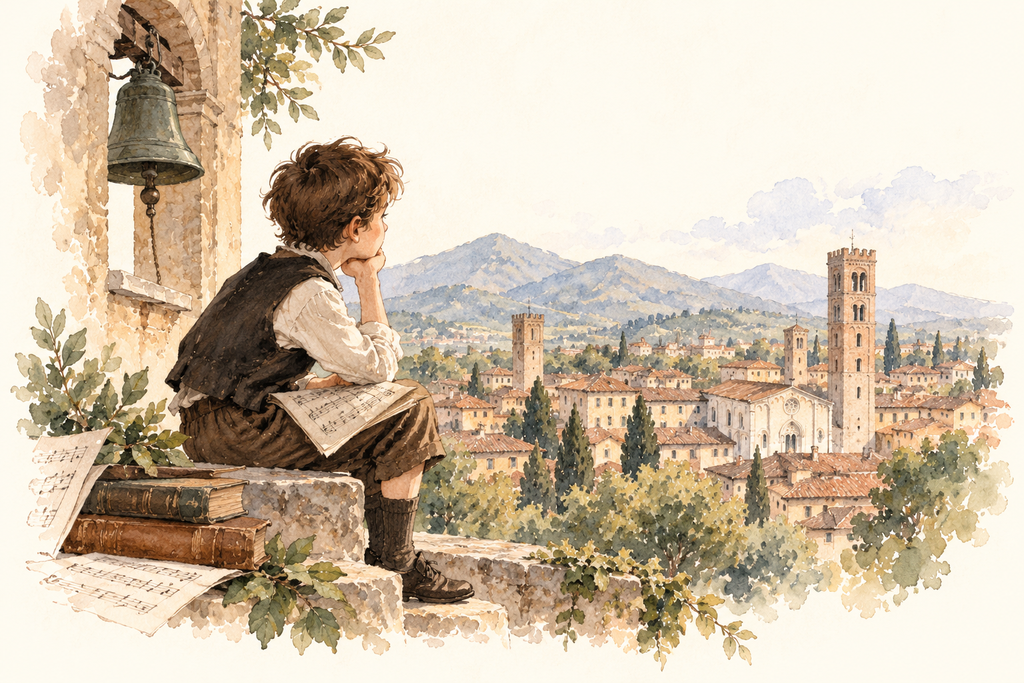
Imagine a quiet Italian town surrounded by old stone walls.
Church bells ring across narrow streets.
Inside the churches, organs play.
And in one musical family lives a boy named Giacomo Puccini.
Music was everywhere in his family.
His father was a musician.
His grandfather had been a musician.
So had his great-grandfather.
For generations, the Puccini family had been responsible for music in the churches of Lucca.
It seemed obvious what young Giacomo would become.
Another church musician.
There was only one problem.
Young Giacomo did not seem particularly interested in becoming one.
He was not known as a wonderfully disciplined student.
He sometimes skipped lessons.
He preferred wandering around with friends.
And after his father died when Giacomo was only five, life was not always easy for the family.
For a while, no one could have guessed that this rather restless boy would become one of the world’s most beloved opera composers.
Then something happened.
A Long Walk—and an Opera
When Puccini was a teenager, he heard about a performance of Aida by Giuseppe Verdi in the nearby city of Pisa.
He wanted to hear it.
Very badly.
According to a famous story, Puccini and some friends walked many kilometres from Lucca to Pisa because they could not afford an easier way to get there.
Imagine the journey.
A long road.
Dusty shoes.
A group of teenagers walking for hours.
All for an opera.
Then the orchestra began.
The curtain rose.
And Puccini heard Verdi’s music.
Something changed.
Years later, Puccini remembered Aida as one of the experiences that helped him understand what he wanted to do with his life.
Church music was no longer enough.
He wanted the theatre.
He wanted drama.
He wanted opera.
From Lucca to Milan
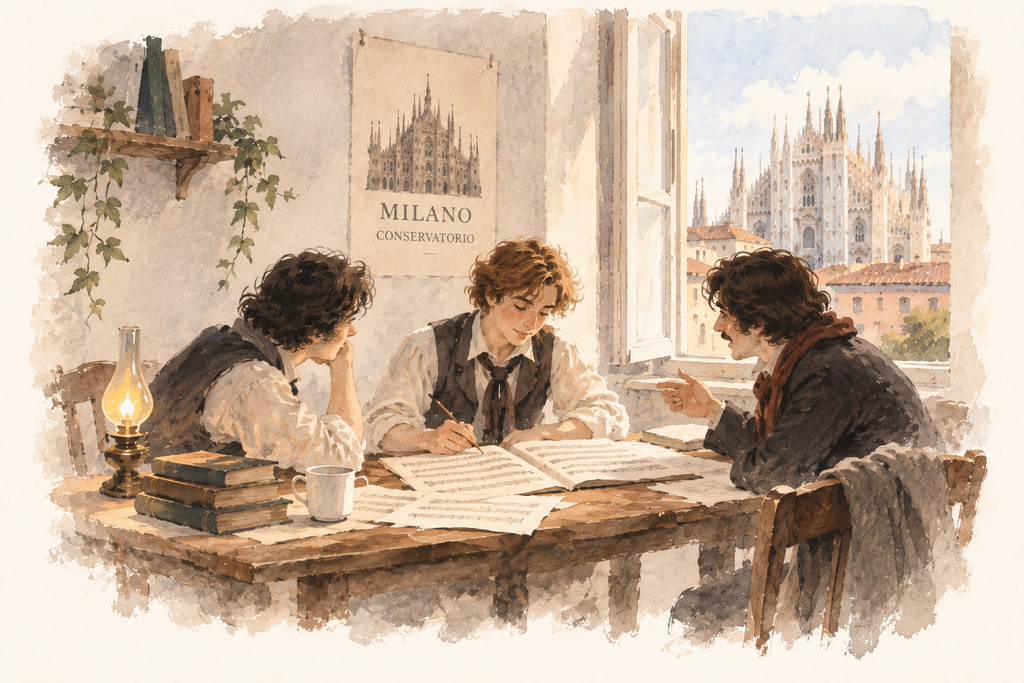
Puccini eventually left Lucca to study at the Milan Conservatory.
Milan was very different from his quiet hometown.
It was busy, modern and full of musicians, artists and theatres.
Money was often short.
Puccini shared rooms, ate simple meals and worried about bills.
But there were also friends, conversations and dreams that continued late into the night.
Years later, when Puccini wrote about young artists living together in a cold Paris apartment, he understood something about their world.
He had known what it was like to be young, ambitious and poor.
One day, he would turn that feeling into La Bohème.
Finding His Own Voice
Success did not arrive immediately.
Puccini wrote early operas and slowly learned how the theatre worked.
Then, in 1893, Manon Lescaut changed everything.
Audiences began to hear something unmistakably Puccini.
His music could be enormous and passionate.
But suddenly it could become very quiet.
A small gesture, a hesitation or a few notes in the orchestra could tell us what a character was feeling before the character said anything at all.
Puccini was discovering his great strength:
he knew how to make an audience care about a person on stage.
Finding Drama in Small Moments
That gift became especially clear in La Bohème.
The opera follows young artists trying to live, work and fall in love in Paris.
But Puccini did not need a king, a battle or a revolution to create drama.
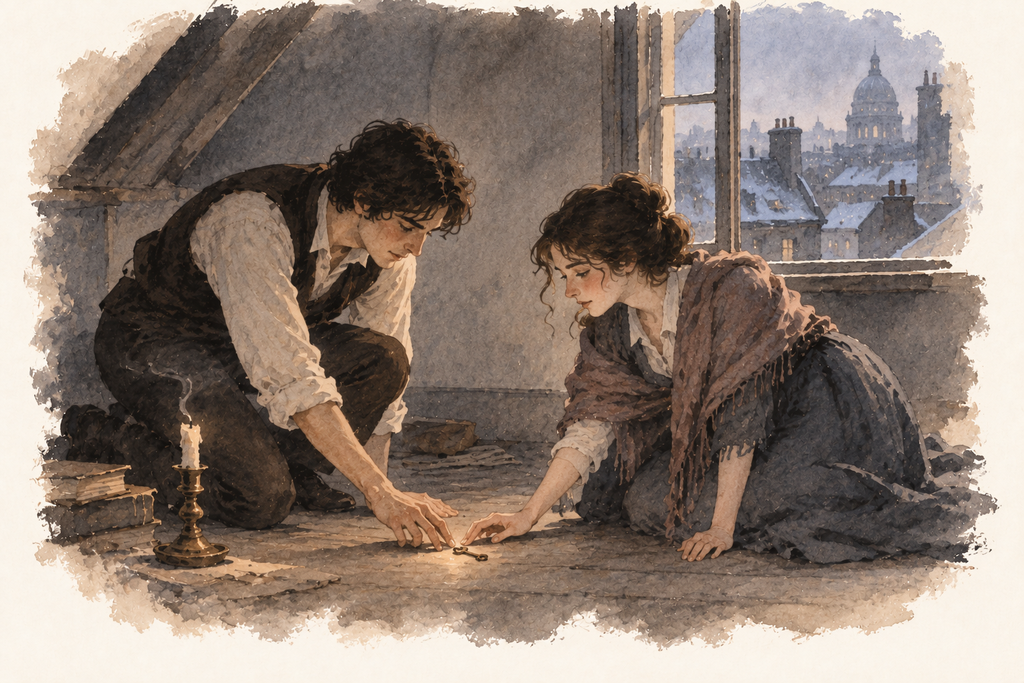
He could begin with something as small as a candle going out.
Two young people search for a lost key in a dark room.
Their hands almost touch.
And suddenly an entire opera seems to open in front of us.
🎵 Listen for: “Che gelida manina” — Rodolfo’s aria
🎵 Listen for: “Sì, mi chiamano Mimì” — Mimì’s aria
Puccini understood that sometimes the smallest moments carry the largest emotions.
Puccini and the Theatre
Puccini was not interested only in beautiful melodies.
He cared intensely about how an opera worked on stage.
Where should a character enter?
When should someone turn around?
Was a scene too long?
Should a character speak—or should there be silence?
He could be demanding and impatient with his librettists.
Words were changed.
Scenes were shortened.
Ideas were rejected and rewritten.
Puccini wanted music, words, acting, scenery and timing to work together.
In this sense, he thought almost like a filmmaker before cinema had fully developed its language.
He wanted to control where the audience looked—and when they felt something.
Tosca: Love, Art, and Danger
In Tosca, premiered in 1900, Puccini created a much darker world.
Politics, violence and fear surround the characters.
Yet one of the opera’s most powerful moments is not loud at all.
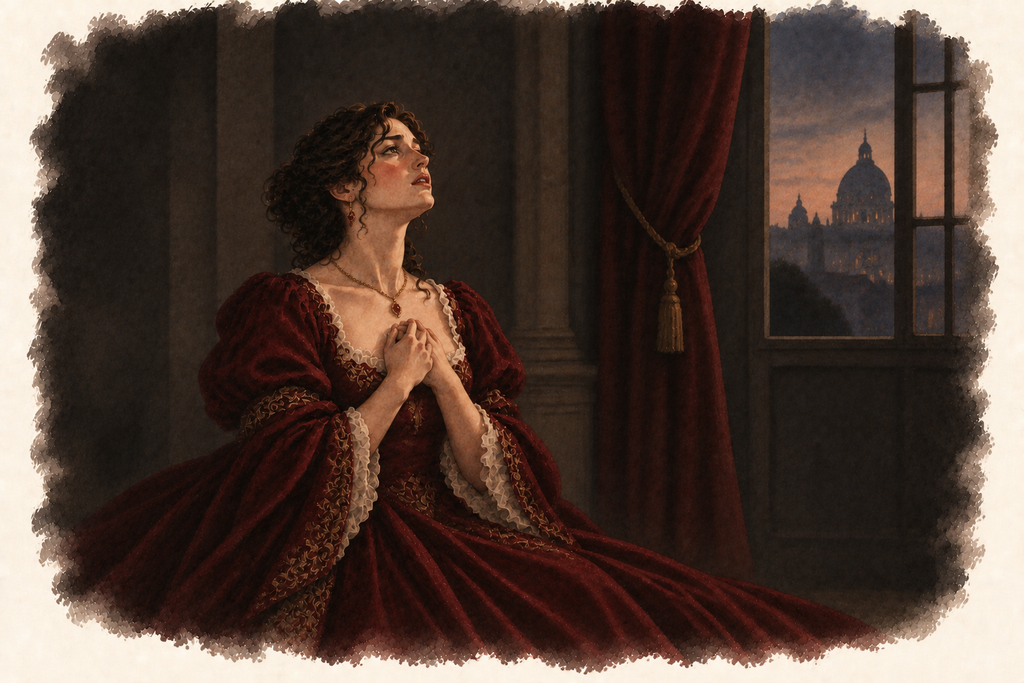
Tosca, a famous singer caught in a terrifying situation, stops and asks why this is happening to her.
She has lived for art.
She has lived for love.
Why has life brought her here?
🎵 Listen for: “Vissi d’arte” — Tosca’s prayer
For a few minutes, the dangerous world around her seems to disappear.
We hear one frightened human being trying to understand what is happening.
Again, Puccini makes the enormous become personal.
A Composer Fascinated by the World
Puccini was Italian, but his imagination travelled far beyond Italy.
His operas took audiences to Paris, Rome, Japan, the American West and eventually an imagined ancient China.
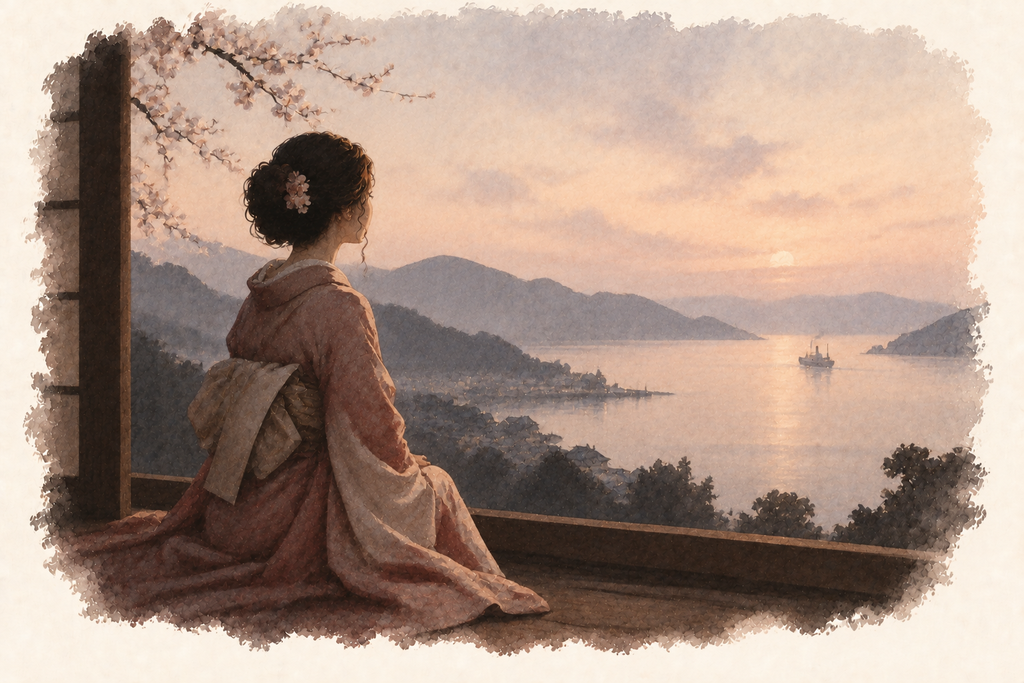
For Madama Butterfly, Puccini searched for musical ideas that could help his European audience imagine Japan.
The result was the story of Cio-Cio-San, a young woman who waits faithfully for a man whom the audience increasingly fears will not return as she hopes.
🎵 Listen for: “Un bel dì vedremo” — Butterfly’s aria
She imagines a ship appearing in the distance.
She can see the reunion in her mind.
We are less certain.
And that makes the music painful.
A Disaster That Became a Masterpiece
Today Madama Butterfly is one of Puccini’s best-known operas.
Its first performance in Milan in 1904, however, was a disaster.
The audience booed.
Puccini was devastated.
But he did something important.
He went back to work.
He revised the structure, changed parts of the music and tried again.
A few months later, the revised opera was received very differently.
This tells us something important about Puccini.
He could be proud and stubborn.
But when something failed, he could also ask:
What isn’t working yet?
And then he tried to fix it.
Puccini Away from the Opera House
Success eventually made Puccini wealthy and famous.
But he did not spend all his time in elegant theatres.
He loved the countryside.
He enjoyed hunting and boats.
He was fascinated by the new invention of the automobile and owned several cars during his life.
One of his favorite places was Torre del Lago, near the Tuscan coast.
There were trees, marshes and a lake.
Here Puccini could work, walk and escape from the noise of theatrical life.
But opera always returned.
There was always another story to find.
Puccini Knew How to Make Us Wait
Puccini had another unusual gift:
he understood waiting.
A melody begins—and stops.
The orchestra becomes quiet.
A character hesitates.
We know something is coming.
But Puccini makes us wait just a little longer.
Then the moment arrives.
This sense of timing is one reason his operas can still feel surprisingly modern.
He understood that emotion is not only about what happens.
It is also about when it happens.
The Final Princess
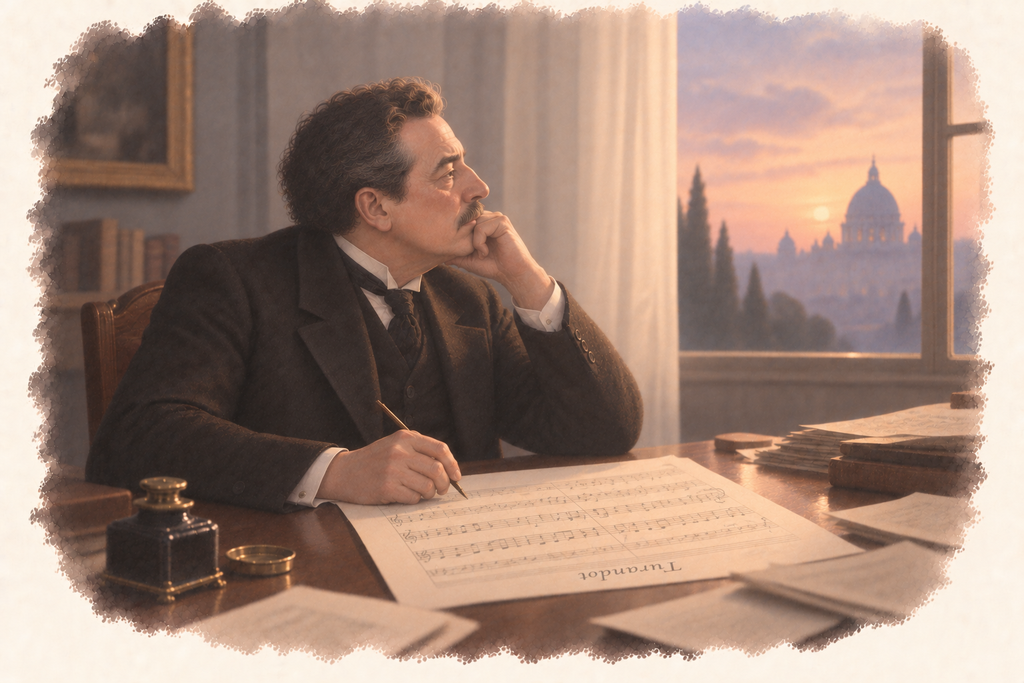
Late in his life, Puccini began working on his most ambitious opera yet:
Turandot.
The setting was an imagined ancient Peking.
There were huge crowds, riddles, ceremonies and a mysterious princess.
But once again Puccini struggled most with the human heart of the story.
How could the cold Princess Turandot suddenly understand love?
Puccini kept searching for the answer.
While he was working, he became seriously ill with throat cancer.
In 1924 he travelled to Brussels for experimental treatment.
Puccini died there on 29 November 1924.
He was 65 years old.
And Turandot was unfinished.
The Opera Puccini Could Not Finish
Other composers later completed the final part of Turandot using Puccini’s sketches.
When Turandot was first performed at La Scala in Milan in 1926, conductor Arturo Toscanini stopped the performance at the point where Puccini’s completed music ended.
The orchestra fell silent.
On later nights, the completed ending was performed.
But that first silence became part of Puccini’s story.
The composer who had spent his life carefully deciding exactly how an opera should end had left his final opera without an ending of his own.
The Music That Continued
Puccini never heard Turandot in the theatre.
He never heard an audience respond to its most famous aria.
🎵 Listen for: “Nessun dorma” — Calaf’s aria
Near its end comes one word:
Vincerò.
I will win.
The melody Puccini never heard performed in its completed opera would eventually travel far beyond the opera house—to concerts, films, television and even enormous sports stadiums.
Why Do We Still Listen to Puccini?
Puccini’s operas can be spectacular.
But his greatest moments are often remarkably small.
A cold hand.
An extinguished candle.
A woman waiting for a ship.
A singer asking why she must suffer.
A composer sitting in front of a score he will never finish.
Puccini understood that an audience does not care about a story simply because the story is large.
We care because someone inside that story matters to us.
That may be his greatest theatrical gift.
He did not simply write music for his characters.
He taught us how to feel with them.
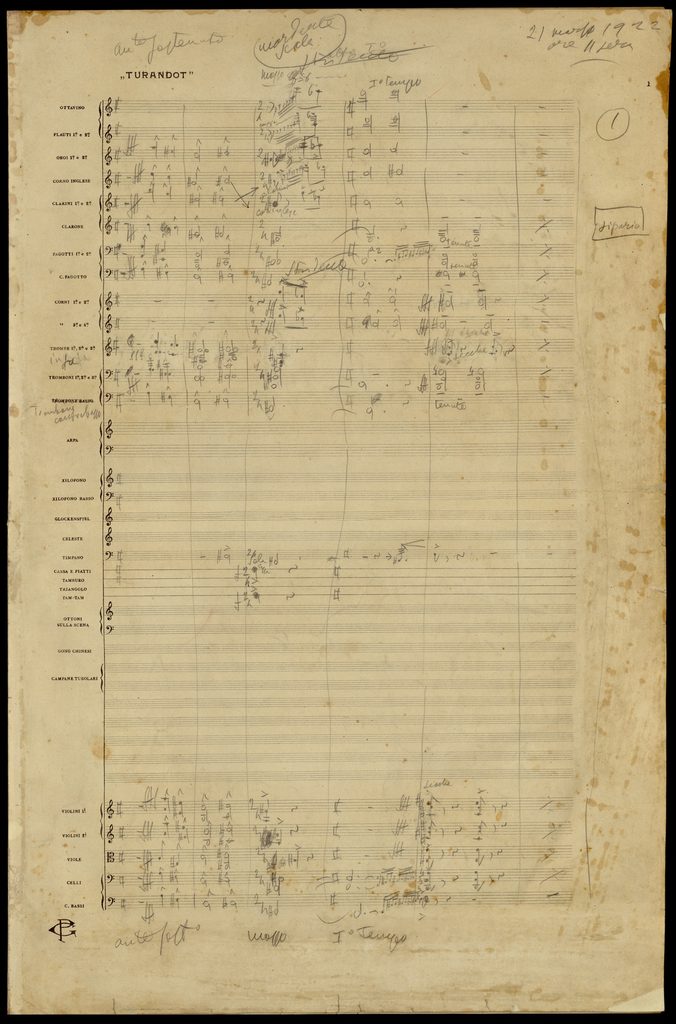
Puccini’s autograph manuscript of Turandot, 1924
Archivio Storico Ricordi · www.archivioricordi.com