
A Life of Music, Courage, and the Human Heart
Giuseppe Verdi (1813–1901)
Born near Busseto, Italy
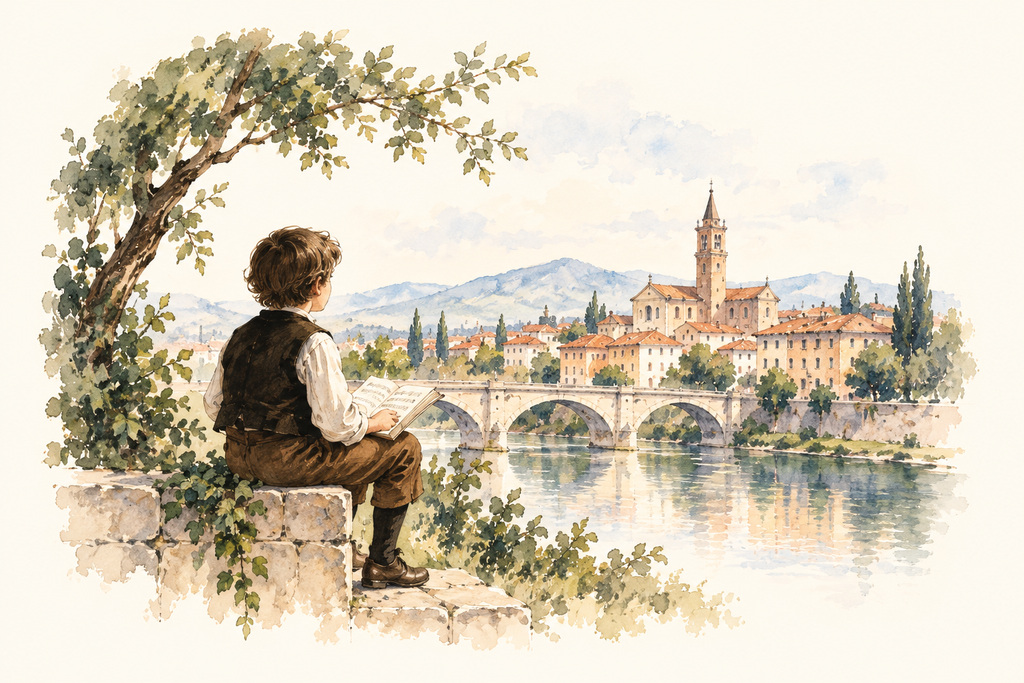
Imagine a small village in the Italian countryside.
There are fields, a little church, a few houses—and a boy who cannot stop listening to music.
His name is Giuseppe Verdi.
His family was not rich or famous. His father ran a small inn and shop, and no one could have guessed that their son would one day become one of the most celebrated opera composers in the world.
But Giuseppe loved music.
As a child, he listened carefully whenever he heard the church organ.
Soon, he began learning to play it himself.
There is even a story that young Giuseppe was once so completely absorbed in listening to the organ during church that he forgot what he was supposed to be doing.
The priest became angry and knocked him down the steps.
Whether every detail of the story is true or not, one thing certainly is:
Verdi was listening to music from the very beginning.
A Young Man with a Dream
As Verdi grew older, people around him noticed his talent.
One of his most important supporters was Antonio Barezzi, a merchant and music lover from the nearby town of Busseto.
Barezzi believed in the young musician and helped him continue his studies.
Eventually, Verdi traveled to Milan, hoping to study at the famous conservatory there.
But something surprising happened.
He was rejected.
Today, the Milan Conservatory is actually named after Verdi.
Life can have a sense of humor.
The rejection did not stop him.
Verdi studied privately, went to the opera, listened to musicians and continued learning.
He was determined to become a composer.
And eventually, the doors of La Scala, one of the world’s great opera houses, opened to his music.
Success—and Terrible Loss
Verdi’s first opera was successful enough to give the young composer hope.
His life seemed to be beginning beautifully.
He had married Margherita Barezzi, Antonio Barezzi’s daughter, and they had two children.
Then tragedy came.
Both of their young children died.
Not long afterward, Margherita died too.
Within only a few years, Verdi had lost his entire young family.
He was devastated.
At the same time, his second opera was a failure.
Verdi later remembered this as one of the darkest periods of his life.
He thought about giving up composition completely.
No more operas.
No more theatre.
Perhaps his career was over before it had really begun.
But then a new story came into his hands.
The Opera That Changed Everything
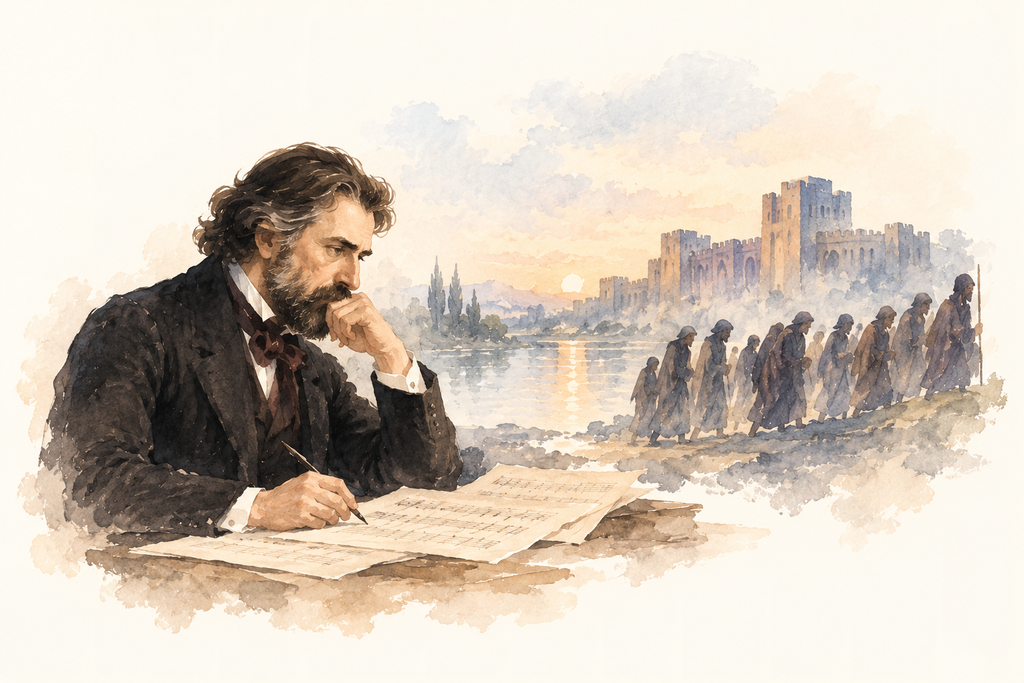
The opera was Nabucco.
At first, Verdi did not want to compose it.
But the words stayed in his mind.
Especially one scene.
In it, a group of people who have been driven from their homeland sing together and remember the country they have lost.
Verdi began to hear music.
And he started writing again.
🎵 Listen for: “Va, pensiero” — Chorus of the Hebrew Slaves
The melody is simple, gentle and deeply emotional.
When Nabucco premiered at La Scala in 1842, it was a great success.
Verdi’s career had begun again.
And this time, there was no stopping it.
Verdi and the Voices of Italy
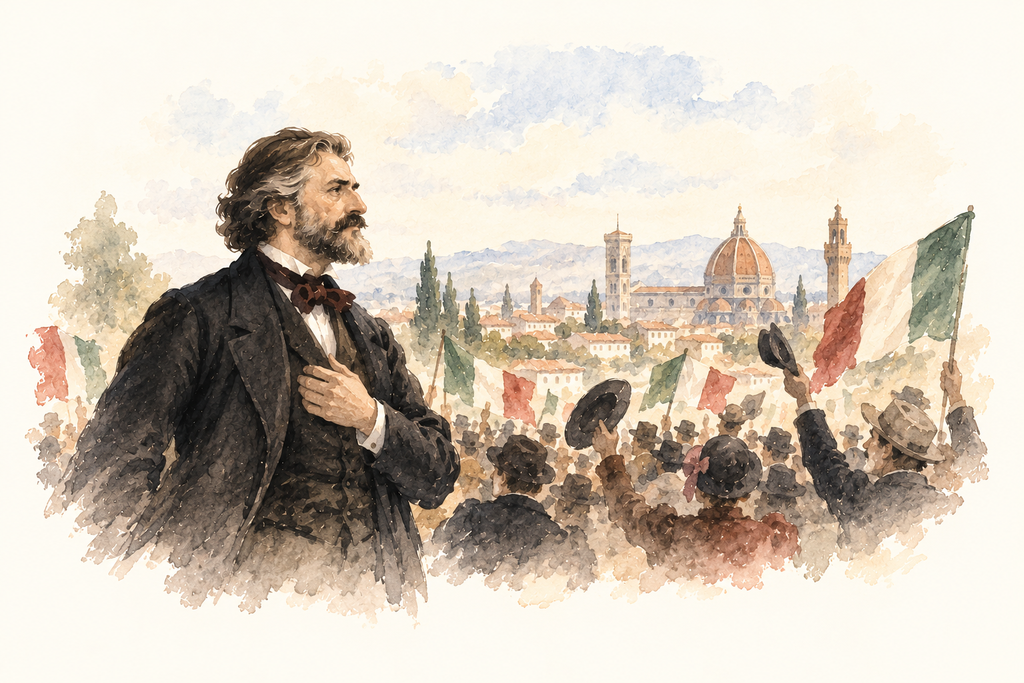
During Verdi’s lifetime, Italy was not yet the single country we know today.
The Italian peninsula was divided into different states and territories, some under foreign rule.
A movement was growing to unite them.
It became known as the Risorgimento.
Verdi did not write his operas simply as political speeches.
But audiences living through this period heard something powerful in his music.
They heard people longing for freedom.
They heard rulers abusing power.
They heard communities suffering together.
They heard voices demanding to be heard.
Even Verdi’s name became connected with the movement.
People sometimes wrote:
VIVA VERDI!
It could mean “Long live Verdi!”
But the letters VERDI could also be read as an abbreviation for Vittorio Emanuele Re D’Italia—Victor Emmanuel, King of Italy.
Opera and politics had suddenly met in four little letters.
Kings, Gypsies, Courtesans—and Ordinary Human Beings
Verdi wrote about kings and nobles, soldiers and conspirators.
But what interested him most was something much simpler:
people.
People who love.
People who make terrible mistakes.
Parents trying to protect their children.
People who are jealous, frightened, proud or lonely.
That is why even Verdi’s grandest operas can feel surprisingly personal.
In Rigoletto, beneath the palaces and court intrigue is the story of a father desperately trying to protect his daughter.
In Il Trovatore, love, revenge and family secrets become tangled together.
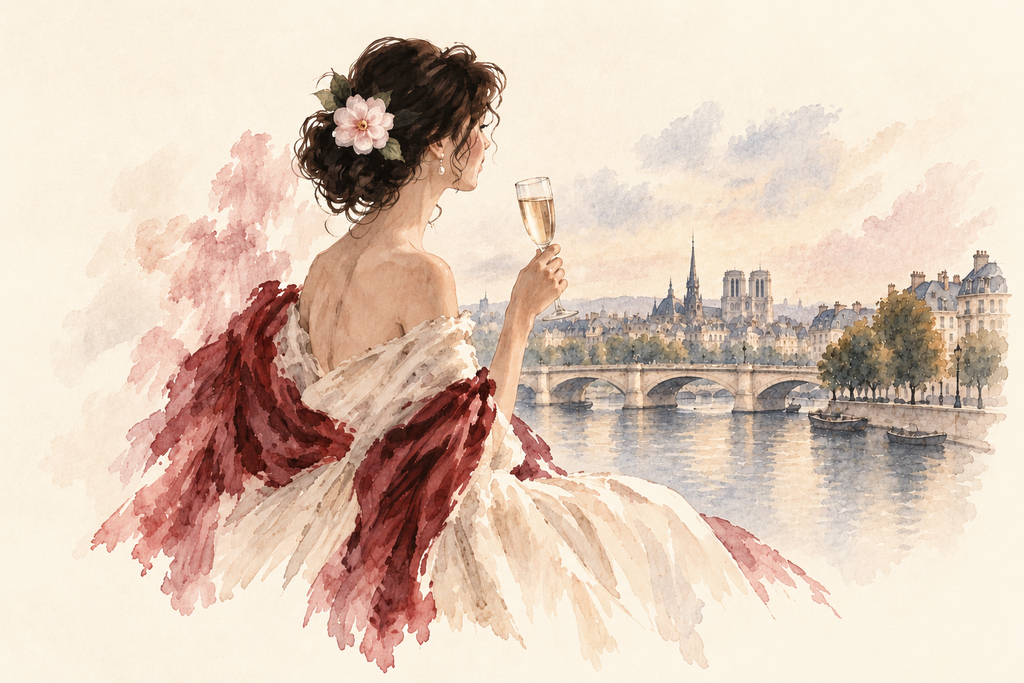
And then came La Traviata.
Its heroine, Violetta Valéry, was very different from the traditional queens and legendary heroes of opera.
She was a woman living in contemporary society.
She falls in love.
She sacrifices her happiness.
And she becomes terribly ill.
🎵 Listen for: “Libiamo ne’ lieti calici” — the Brindisi
At first, the music sparkles like champagne.
Everyone is celebrating.
But we already know that beneath the beautiful dresses and laughter, Violetta’s story will not remain happy for long.
That contrast is very Verdi.
Joy and sadness often live surprisingly close together in his music.
Verdi Knew How to Write for the Voice
Verdi understood something essential about opera:
A singer is not simply producing beautiful sounds.
A singer is telling a story.
When one of Verdi’s characters sings, the melody follows the emotion of the words.
Anger sounds different from fear.
A father’s love sounds different from romantic love.
A crowd can sound powerful enough to shake a theatre.
And sometimes one quiet voice can be even more powerful.
Verdi expected a great deal from singers.
But he was not interested in beautiful singing merely for decoration.
The voice had to mean something.
The drama came first.
A Composer Who Kept Changing
Verdi became enormously successful.
He could easily have continued writing the same kind of opera again and again.
He didn’t.
His music kept developing.
Years after La Traviata, he created the enormous spectacle of Aida, with its ancient Egyptian setting, grand ceremonies and famous triumphal scene.
But at the heart of Aida is still a very intimate story about people trapped between love and duty.
Then, when Verdi was already in his seventies, something remarkable happened.
He returned to Shakespeare.
The result was Otello.
The music flows almost continuously as jealousy slowly destroys the hero.
And Verdi still wasn’t finished.
For his final opera, he did something rather unexpected.
After a lifetime famous for tragedy, he wrote a comedy.
Falstaff.
Verdi was nearly eighty.
And he was still trying something new.
Verdi the Man
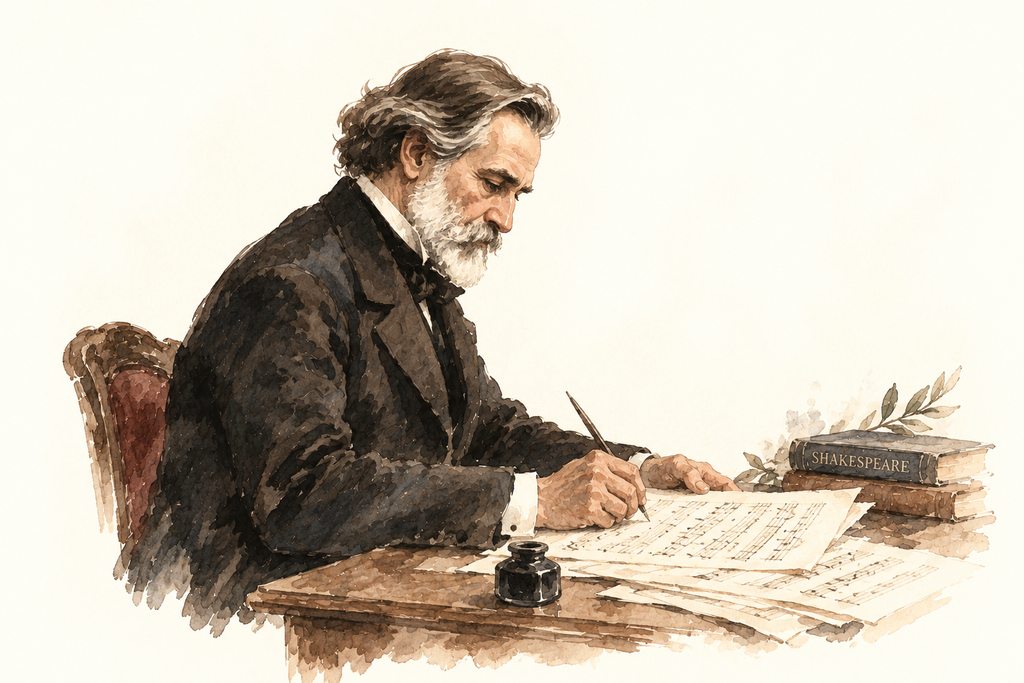
Despite his international fame, Verdi remained deeply attached to the countryside.
He bought an estate at Sant’Agata, near the place where he had grown up.
He enjoyed farming and took a serious interest in the land.
He could be private, stubborn and very direct.
He did not particularly enjoy people telling him what to do.
Perhaps that helps explain his operas.
Again and again, his characters struggle against rules, expectations and powerful authorities.
Verdi also cared about the people around him.
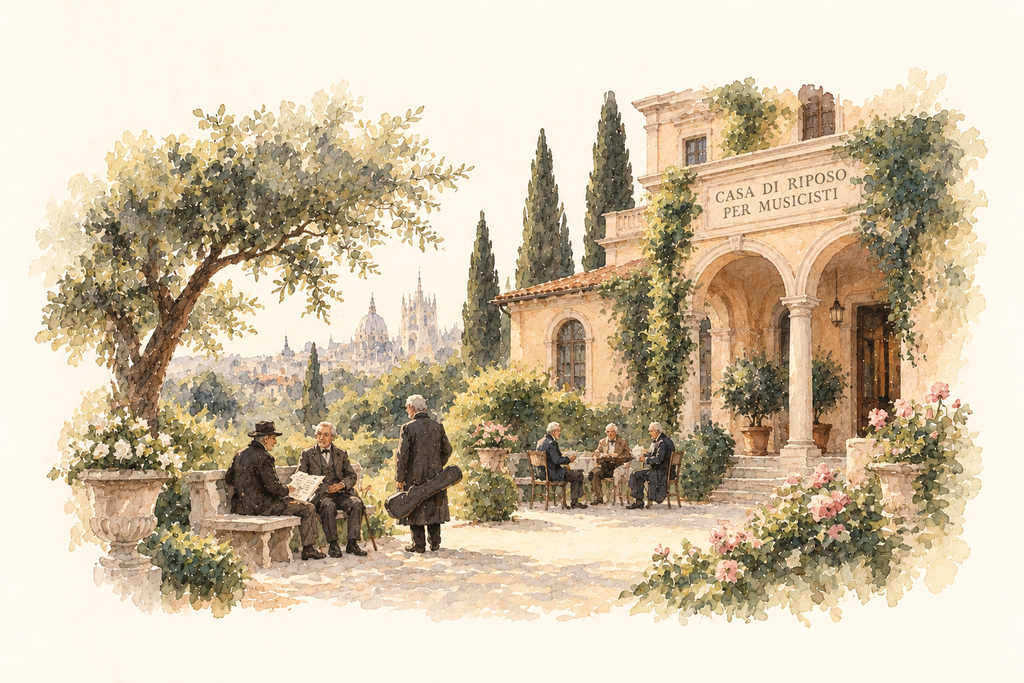
Later in life, he financed a home in Milan for elderly musicians who needed support.
It was called the Casa di Riposo per Musicisti.
Verdi considered it one of the works of which he was most proud.
Not an opera.
A home.
His Final Years
Verdi lived a long life.
He had been born when Italy was still divided.
By the time he was an old man, he had watched the country become united.
His music had been performed across Europe and far beyond it.
When Verdi died in Milan in 1901, he was 87 years old.
Italy mourned.
Later, when his body was moved to the Casa di Riposo, an enormous crowd gathered in Milan.
And thousands of voices sang together.
The music they sang was:
The chorus that had helped make the young Verdi famous almost sixty years earlier had become a farewell to him.
Why Do We Still Listen to Verdi?
Verdi’s world can seem very far away from ours.
Kings.
Duels.
Palaces.
Revolutions.
Secret letters.
Impossible loves.
But underneath all of that, his stories ask questions we still understand.
What would you sacrifice for someone you love?
What happens when pride becomes stronger than kindness?
Can a parent protect a child from everything?
What does freedom mean?
And what happens when society judges someone without truly knowing them?
Verdi knew that opera could be enormous.
A huge orchestra.
A stage full of people.
A chorus powerful enough to fill an entire theatre.
But he also knew that the biggest drama can happen inside just one human heart.
Verdi did not simply make opera grand.
He made it human.
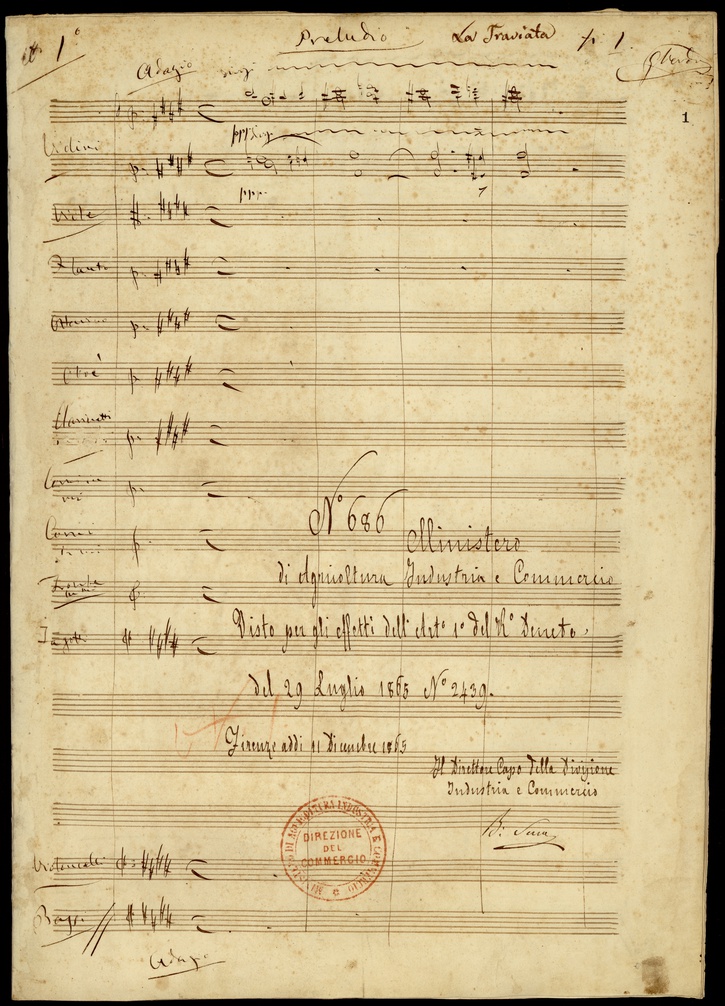
Verdi’s autograph manuscript of La Traviata, 1853
Archivio Storico Ricordi · www.archivioricordi.com