
A Story of Young Love, Friendship, and a Cold Winter in Paris
Music by Giacomo Puccini
Libretto by Luigi Illica and Giuseppe Giacosa
Based on Scènes de la vie de bohème by Henri Murger
Paris, on a freezing winter night.
High above the busy streets, in a tiny attic room, four young friends are trying to make their way in the world.
They do not have much money.
Sometimes they do not even have enough wood for the fire.
But they have something else.
Dreams.
Rodolfo is a poet.
Marcello is a painter.
Schaunard is a musician.
And Colline is a philosopher.
They argue, laugh, create art, and share whatever little they have.
Then, on Christmas Eve, someone knocks on the door.
Her name is Mimì.
And from that small knock begins one of opera’s most beautiful love stories.
Act I — A Candle Goes Out
It is Christmas Eve.
Rodolfo and Marcello are sitting in their freezing attic.
Marcello is trying to paint.
Rodolfo is trying to write.
Neither is having much success.
Mostly because they are freezing.
“It’s colder in here than outside!”
There is no firewood left.
Rodolfo looks at the pages of the play he has been writing.
He thinks for a moment.
Then—
into the stove they go.
Marcello watches in horror.
“Your play!”
“At least it is finally creating some heat,” Rodolfo replies.
For a few glorious moments, the room becomes warmer.
Soon their friends Schaunard and Colline arrive.
And this time, Schaunard has wonderful news.
He has earned some money!
Suddenly there is food, wine, and enough money for a night out.
The four friends decide to celebrate Christmas Eve at Café Momus in the Latin Quarter.
But just as they are about to leave, their landlord Benoît arrives to collect the rent.
The friends have no intention of giving up their precious money so easily.
They invite Benoît in.
They offer him wine.
They encourage him to talk.
And soon Benoît says a little too much about his adventures with women.
The friends pretend to be terribly shocked.
“Benoît! And you are a married man!”
They dramatically throw him out of the room.
The rent remains unpaid.
Problem solved.
For now.
Everyone leaves for Café Momus except Rodolfo, who stays behind for a few minutes to finish an article.
Then—
knock, knock.
A young woman stands outside his door.
It is his neighbor, Mimì.
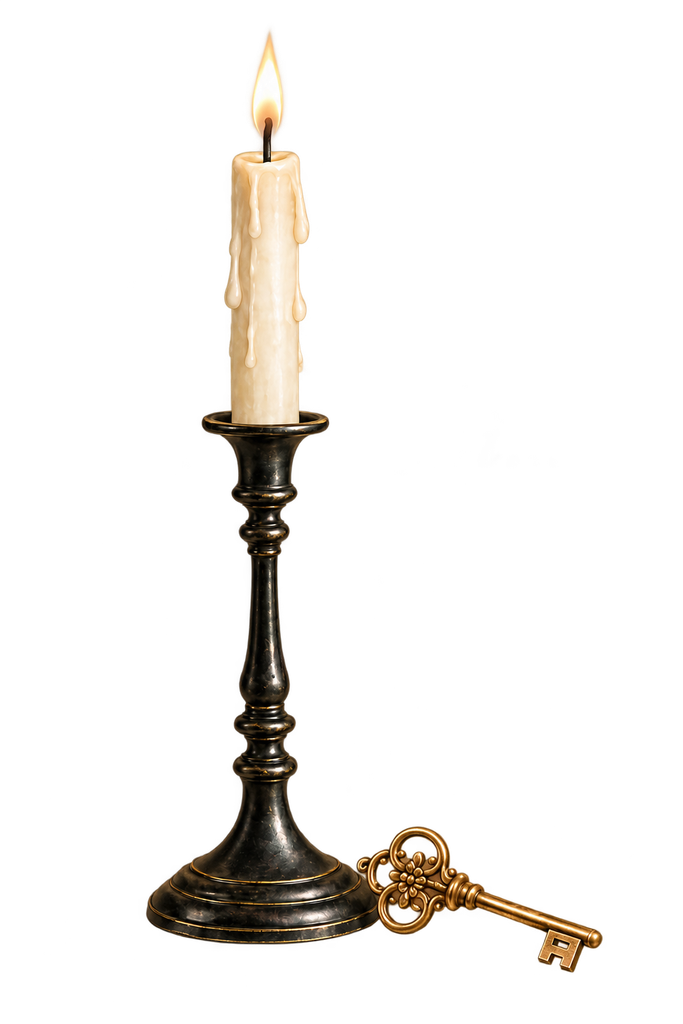
Her candle has gone out.
“Excuse me… could you light it for me?”
Rodolfo does.
Mimì thanks him and turns to leave.
But suddenly she feels faint.
Rodolfo helps her to a chair.
After a moment she feels better and prepares to go.
Then she realizes something.
“My key!”
She has dropped it somewhere in the room.
And at that exact moment—
her candle goes out again.
Then Rodolfo’s candle goes out too.
Now the room is completely dark.
They search for the key together.
Rodolfo finds it first.
But he quietly slips it into his pocket.
Perhaps he would like Mimì to stay a little longer.
As they continue searching in the darkness, their hands touch.
Mimì’s hand is freezing.
Rodolfo gently holds it.
And begins to tell her who he is.
🎵 “Che gelida manina” — Rodolfo
Gianni Raimondi brings warmth and effortless lyricism to Rodolfo’s first great moment. As the music rises, a simple introduction becomes one of opera’s most beautiful declarations of hope and love.
“Your little hand is frozen.” Rodolfo tells Mimì that he is a poet, that he lives poorly but dreams richly, and that beauty and imagination are his treasures.
Then it is Mimì’s turn.
🎵 “Sì, mi chiamano Mimì” — Mimì
Freni’s Mimì feels wonderfully natural here — gentle, shy and completely sincere. Mimì became one of the roles most closely associated with her, and it is easy to understand why: she does not try to impress Rodolfo; she simply tells him who she is, and that simplicity makes the moment all the more touching.
Mimì tells Rodolfo about her simple life. She embroiders flowers, lives alone, and loves the first sunshine of spring.
There is nothing grand about her story.
And perhaps that is exactly why Rodolfo loves hearing it.
From the street below, Rodolfo’s friends call:
“Rodolfo! Are you coming?”
He looks at Mimì.
“Would you like to come with me?”
She smiles.
Together, they step out into the Paris night.
🎵 “O soave fanciulla” — Mimì & Rodolfo
Freni and Raimondi make this moment feel beautifully spontaneous — two young people stepping out into the Paris night, already completely swept up in each other. Their voices come together as Rodolfo and Mimì’s first meeting turns into love.
Rodolfo and Mimì realize that they are falling in love as they leave the attic together.
One candle.
One lost key.
One cold hand.
And suddenly, two lives have changed.
Act II — Christmas Eve in Paris
The Latin Quarter is bursting with life.
Children run through the streets.
Vendors shout.
People buy toys, food, and Christmas gifts.
Lights glow everywhere.
Rodolfo, Mimì, Marcello, Schaunard, and Colline arrive at Café Momus.
Rodolfo introduces Mimì to his friends.
He buys her a little pink bonnet.
It is a simple gift.
But Mimì loves it.
The friends sit down to eat, drink, laugh, and celebrate.
Then Marcello suddenly sees someone he knows very well.
Musetta.
She is his former lover.
And she has arrived with a wealthy older admirer named Alcindoro.
Musetta notices Marcello immediately.
Marcello tries very hard not to notice her.
This, of course, makes Musetta even more determined to get his attention.
She laughs loudly.
She complains.
She flirts.
She makes sure that everyone in the café is looking at her.
Especially Marcello.
🎵 “Quando me’n vo’” — Musetta’s Waltz
Adriana Martino captures Musetta’s confidence and irresistible charm perfectly. She knows that everyone is watching her — especially Marcello — and she enjoys every second of it. This is Musetta making an entrance, and making sure no one can look away.
Musetta sings about how everyone watches and admires her when she walks through the streets. But there is really only one person whose attention she wants: Marcello.
Marcello tries to resist.
He fails.
Completely.
Musetta suddenly complains that her shoe hurts.
“Alcindoro, please! Go and buy me another pair!”
Alcindoro obediently leaves.
The moment he is gone, Musetta runs back to Marcello.
The two lovers are reunited.
Then comes another problem.
The bill.
None of the young friends has enough money to pay it.
Musetta has an idea.
She tells the waiter:
“Put everything on Alcindoro’s bill.”
And off they go.
A few moments later, Alcindoro returns with the shoes.
The friends are gone.
Musetta is gone.
And waiting for him on the table is…
a very large bill.
Act III — Love in the Snow
Winter has become colder.
Early one morning, snow covers the streets outside Paris.
Marcello is staying at an inn near the city gates, where he paints signs to earn money.
Musetta is there too, giving singing lessons.
Then Mimì appears.
She is alone.
Cold.
And very unhappy.
She asks for Marcello.
When he comes outside, she tells him what has happened.
Rodolfo has become terribly jealous.
They argue constantly.
Last night, he left her.
“He loves me,” Mimì says quietly.
“But his jealousy is making us both miserable.”
Marcello tells her that Rodolfo is inside.
Mimì hides nearby when Rodolfo comes out.
Marcello asks his friend what is wrong.
At first, Rodolfo complains about Mimì.
He says she flirts too much.
He says they should separate.
But Marcello does not believe him.
Finally, Rodolfo admits the truth.
Mimì is very ill.
Their attic is freezing.
They have little food.
Rodolfo is poor, and he believes that staying with him is making her illness worse.
“I love her,” he confesses.
“That is why I am afraid.”
Mimì hears everything.
She begins to cry.
Rodolfo hears her.
“Mimì?”
She steps out from her hiding place.
Now there is nothing left to hide.
They know that their love cannot continue as it has.
Mimì tells Rodolfo that perhaps they really should say goodbye.
But then she remembers the little things she has left in his room.
Her belongings.
Her memories.
And the pink bonnet he bought her on Christmas Eve.
🎵 “Donde lieta uscì” — Mimì
Freni brings extraordinary tenderness to Mimì’s farewell. There is no anger here — only love, sadness and quiet acceptance as she asks Rodolfo to return the few belongings she left behind. In her voice, even the simplest words become heartbreaking.
Mimì gently tells Rodolfo that she will return to her lonely room and asks him to gather the few things she has left behind. He may keep the pink bonnet as a memory of their love.
But saying goodbye is harder than they expected.
Why separate now, in the middle of winter?
They decide to stay together a little longer.
“We’ll wait until spring.”
When the flowers return and the sun becomes warm again—
then they will part.
Nearby, Marcello and Musetta are having a very different kind of farewell.
They argue.
They accuse each other.
They shout.
So while Mimì and Rodolfo quietly promise to remain together until spring…
Marcello and Musetta separate in a storm of angry words.
Two couples.
Two very different kinds of love.
Act IV — Back in the Attic
Spring has come.
Rodolfo and Marcello are back in their old attic.
Mimì is no longer with Rodolfo.
Musetta is no longer with Marcello.
The two men pretend that they are perfectly happy.
They work.
Or at least, they try to.
But neither can stop thinking about the woman he loves.
🎵 “O Mimì, tu più non torni” — Rodolfo and Marcello
Pavarotti and Quilico capture the quiet sadness beneath this conversation beautifully. Rodolfo and Marcello try to speak lightly of the women they have lost, but the music tells us what their words cannot hide — neither man has truly moved on.
Rodolfo remembers Mimì while Marcello thinks of Musetta. Both men pretend to be fine, but both are heartbroken.
Then Schaunard and Colline arrive.
The four friends have almost nothing to eat.
So they do what they have always done.
They turn poverty into a game.
They pretend they are attending a grand banquet.
They dance.
They joke.
They even stage a ridiculous mock duel.
For a few moments, the attic is full of laughter again.
Then the door suddenly opens.
Musetta rushes in.
Her face is serious.
“Mimì is downstairs.”
Rodolfo freezes.
Mimì is very sick.
She has asked Musetta to bring her back to Rodolfo.
The friends help Mimì into the room and place her on the bed.
She is cold.
Musetta removes her earrings and tells Marcello to sell them so they can buy medicine.
She also asks him to find a doctor.
Colline looks at his old coat.
It is one of the few things he owns.
But Mimì needs help more than he needs a coat.
🎵 “Vecchia zimarra” — Colline
László Polgár brings wonderful warmth and dignity to Colline’s brief farewell to his old coat. What seems almost comic at first becomes unexpectedly moving — even this worn coat is part of the little world the friends are about to lose.
Colline says goodbye to his old coat before taking it away to sell. It is a small, touching moment of friendship and generosity.
One by one, the friends leave to find help.
For a little while, Mimì and Rodolfo are alone.
They remember the night they first met.
The candle.
The lost key.
Her frozen hand.
Rodolfo finally admits something.
“I found your key that night.”
Mimì understands.
“I knew.”
They smile.
For a moment, they are once again the young couple who fell in love on Christmas Eve.
Musetta returns with a muff to warm Mimì’s hands.
Mimì is delighted.
She believes it is a gift from Rodolfo.
She closes her eyes and rests.
The room becomes quiet.
Very quiet.
Schaunard looks at Mimì.
Then at Marcello.
He understands first.
Mimì has died.
Marcello tries to keep Rodolfo away.
But Rodolfo sees his friends’ faces.
He looks toward the bed.
And suddenly he understands too.
“Mimì…”
No answer.
He runs to her.
“Mimì!”
The friends stand silently around him.
There is nothing they can say.
The little attic where their love began has become the place where it ends.
But the candle, the pink bonnet, the frozen hand—
and that first Christmas Eve—
will remain with Rodolfo forever.
Beyond the Story
The Bohemians of Paris
La Bohème was inspired by Henri Murger’s Scènes de la vie de bohème, a collection of stories about young artists living in Paris.
Like Rodolfo and his friends, Murger knew the world of struggling writers, painters and musicians — people with little money, but plenty of dreams. His stories captured their friendships, romances, cold rooms and uncertain lives.
Even Café Momus was real. Murger and other artists gathered there, although the actual café was not in the Latin Quarter but near the Louvre, on the Right Bank. The real Paris of Murger’s bohemians was already finding its way into the story.
Puccini transformed this world into music, making the everyday lives of ordinary young people feel unforgettable.
Perhaps that is why La Bohème still feels so close to us: it is not a story about kings or heroes, but about young people trying to create, love, and find their place in the world.